Last updated 2026-08-19
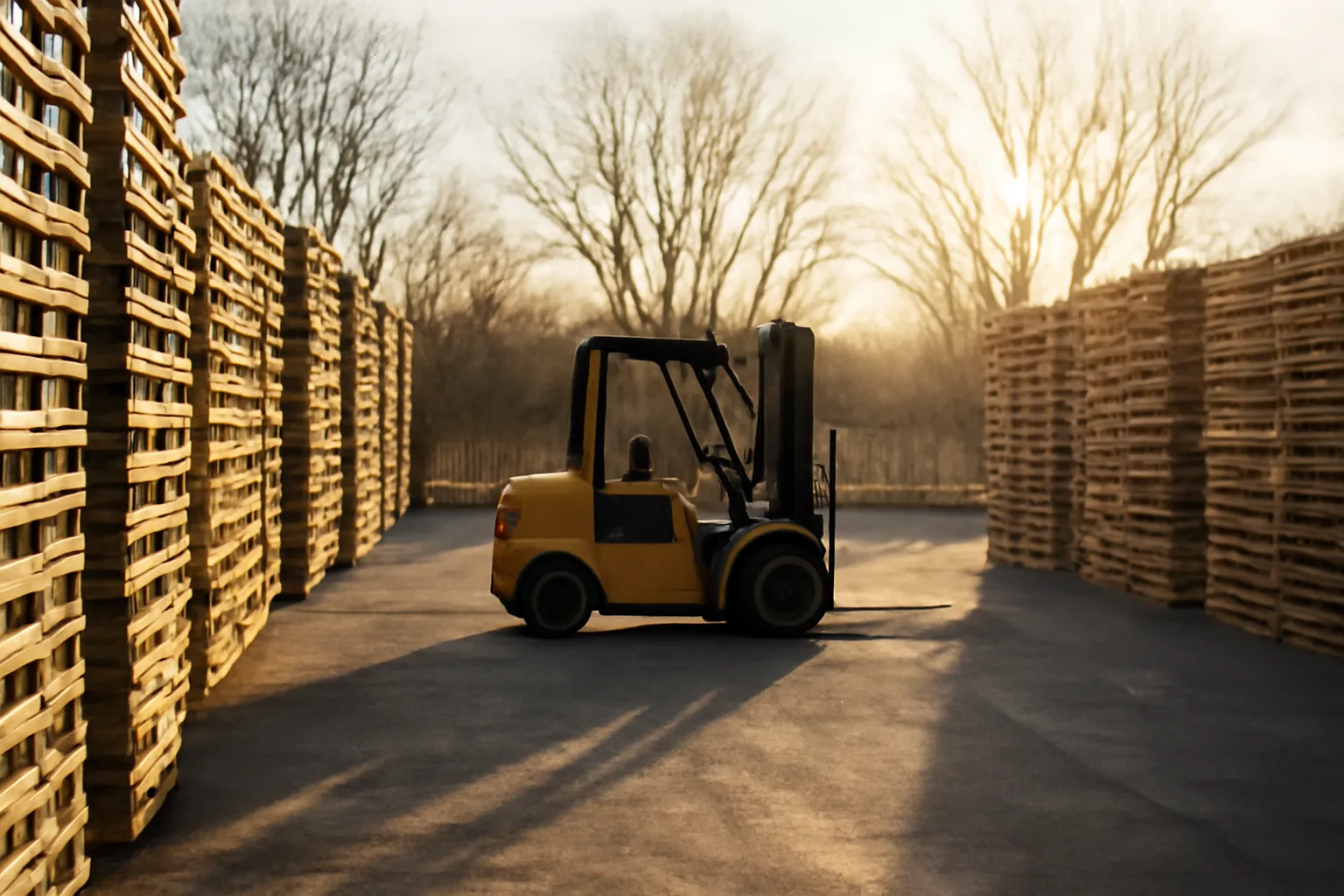
TL;DR
Connecticut does not run a pallet yard license board. You form an entity with the Secretary of the State, get tax IDs, then win local zoning in one of 169 towns. DEEP may want stormwater or solid-waste paper if you store, grind, or discharge. Export heat-treat marks are federal. Confirm every fee and hearing date with the town and the agency that issued the form.
Do you need a license for a pallet yard in Connecticut?
No. Connecticut does not issue a statewide pallet yard license, and there is no pallet board in Hartford that stamps your stacks. You still need a stack of ordinary business paper plus local land-use approval before you take in wood.
People hear “license” and picture one state card. That is the national myth. What you actually need is a legal seller, a legal site, and, if you mark export pallets, a federal heat-treatment program. Skip any of those and a zoning officer or a buyer’s auditor will stop you faster than a missing plaque ever would.
Start with the entity. One or more persons form a Connecticut LLC by delivering a certificate of organization to the Secretary of the State. The statute is blunt: “One or more persons may act as organizers to form a limited liability company by delivering to the Secretary of the State for filing a certificate of organization.” [4] Confirm the current filing amount on the Secretary’s fee schedule. Do not trust a blog number, including this one, once a budget year turns.
You also need a federal EIN if you will hire, open a real bank account, or file employment returns. The IRS application is free and runs online. [8] Then you register as a seller. Connecticut sales tax law says no person shall engage in business as a seller in the state unless a permit has been issued as prescribed in that section. [10] File that in myconneCT and confirm whether the town also wants a local vendor card. Some do. Many do not.
If you have employees, workers’ compensation is not optional. Chapter 568 requires an employer to secure compensation for employees. [3] Unemployment tax registration sits with the Department of Labor. None of that is a “pallet license.” All of it is the paper a pallet yard connecticut operator actually gets asked for on week one.
I would not spend money on a framed “license” from a random consultant. Spend it on the site plan the zoning commission will actually read.
What board actually reviews a pallet yard in Connecticut?
The board you meet is almost always the municipal planning and zoning commission, sometimes the zoning board of appeals after a denial. Connecticut has 169 municipalities, and land use is local. [12] The state enabling act lets each zoning commission regulate the location and use of land for trade and industry. [1]
That is the whole plot. There is no special pallet commission. Staff planners write the memo. Commissioners vote after a public hearing if your use needs a special permit. Fire marshals and building officials join if you put up a shed, a kiln building, or racking that counts as a structure.
DEEP is a permit shop, not a town board. It does not rezone your lot. It can still halt grinding, outdoor storage that sheds leachate, or a discharge into waters of the state. USDA APHIS sits even further away. It only cares if you want the official heat-treat mark on wood packaging. [5]
Call the town planner before you sign a lease. Ask three questions. Is outdoor pallet storage allowed in this district? Is it as-of-right or special permit? Does the inland wetlands agency want a look because the lot sits near a stream? Write the answers down. Town websites lie by omission.
If you already ran a yard somewhere else, do not import that state’s checklist. California’s path and Florida’s path will not get you through a Connecticut inland wetlands hearing.
How much does a pallet yard cost in Connecticut?
Nobody publishes a clean statewide pallet yard startup survey for Connecticut. The closest honest answer is a stack of line items you price locally, not a single magic total.
Entity and tax paper is the cheap part. The Secretary of the State charges a published fee to file a certificate of organization. Confirm that number on the current commercial recording fee schedule before you write the check. [4] The IRS EIN is free. [8] Sales and use tax permit filing is done through DRS. Confirm whether any town add-on exists. Workers’ compensation and general liability are the first real insurance checks, and they move with payroll, forklifts, and fire load. I will not invent a premium.
Land dominates. Coastal and I-84 industrial parks cost more than a metal building on a back lot in the northeast corner of the state. I would not sign a five-year lease until zoning staff says outdoor storage is legal on that parcel. A cheap lot with the wrong district is not cheap.
Equipment is the part you can actually shop. A used sit-down forklift, pallet jacks, a saw, a notcher, and a pneumatic nailer will open a repair yard. A chamber kiln, recording gear, and a covered loading lane belong to the heat-treat version of this business. Buying the kiln first is how people light money on fire. Get accounts, then heat.
Soft costs people forget: a class A-2 survey if the town demands one, a stormwater plan if DEEP coverage applies, attorney time for the special permit, and a fence the neighbors will accept. In a fussy shoreline town I would budget counsel. In a tired industrial park with existing outdoor storage, maybe not.
First-year cash also includes scrap disposal or grinding, diesel, and the weeks you sit half idle after the hearing. If a broker or “kit” seller quotes one statewide cost for a pallet yard connecticut launch, walk away. Confirm every municipal fee with the clerk who deposits it.
How long does a pallet yard take in Connecticut?
Entity paper can be fast. Zoning is the clock that matters, and nobody honest will guarantee that clock.
An LLC certificate can file in days once the Secretary of the State accepts it. [4] EIN issuance is often same day online. [8] DRS seller registration is electronic. Those steps are not your critical path.
A special permit with a public hearing is. Towns set their own notice periods, completeness reviews, and meeting calendars. Inland wetlands can add another board. A site plan revision after the first staff memo adds another cycle. I have seen operators treat “two months” as a plan. That is a wish. Confirm the next filing deadline and the next regular meeting with the planner whose name is on the agenda.
Building permits track the structure, not the pallets. A kiln building or a repair shed waits on drawings, the fire marshal, and inspections. Heat-treat authorization, if you want the mark, waits on federal program steps after the chamber works. [5] Do not promise a customer an HT stamp on a date you do not control.
If the use is already allowed as-of-right in an industrial district, you can be stacking sooner. Confirm that in writing. Verbal “should be fine” from a landlord is not an approval.
Which state filings come before you stack the first pallet?
Do the identity paper first. Site paper second. Equipment third. That order saves leases you cannot use.
File the entity. Keep the stamped copy. Get the EIN. Open the bank account in the entity name, not your nickname. Register with DRS for sales and use tax if you will sell pallets, lumber, or repair services that the state treats as taxable. [10] Ask DRS, not a Facebook group, whether your mix of repair versus resale changes the tax treatment. Rules shift and I will not fake a rate.
If you hire even one person, register as an employer and put workers’ compensation in force before that person lifts a board. [3] OSHA still expects powered industrial truck training when a forklift shows up. The federal standard is 29 CFR 1910.178. [7] Connecticut does not rewrite that rule for you.
Trade name filing matters if you sell as something other than the LLC’s legal name. Confirm the town clerk versus Secretary of the State split for your structure. Sole proprietors and LLCs do not always use the same counter.
I would not buy a truckload of cores until the zoning file has a received stamp. Inventory is a terrible security deposit on a lot you cannot occupy.
Does Connecticut DEEP treat a pallet yard as a solid waste site?
Sometimes. Repairing and reselling pallets is usually commerce. Grinding broken decks into mulch, taking in mixed C&D, or letting the lot become a dump is waste activity. The line is operational, not poetic.
The commissioner may issue, deny, modify, renew, suspend, revoke, or transfer a permit for the construction, alteration, or operation of solid waste facilities. That is the opening grant of power in C.G.S. section 22a-208a. [2] You do not get to self-declare that a mountain of scrap stringers is “inventory” if you never ship it.
Clean wood has its own DEEP conversation. If you only handle untreated pallets and send unusable pieces to a lawful outlet, you may stay outside a full facility permit. Confirm that with DEEP waste staff for your exact process. Do not confirm it with a guy who runs a chipper in another county. [2]
I would keep purchase logs and outbound tickets from day one. If an inspector asks where the broken wood went, “we burned it behind the shed” is how yards die. Lawful disposal costs money. Illegal disposal costs the yard.
If your plan is a recycling campus with grinders and outdoor piles, budget real permitting time. If your plan is sort, repair, and ship, stay in that lane on paper and on the ground.
Do you need stormwater coverage for a pallet yard in Connecticut?
You might. Pallet manufacturing and many timber-product yards sit in the industrial stormwater world. EPA’s Sector A timber products materials list wood pallets under SIC 2448. [6] Connecticut administers industrial stormwater through DEEP, not through a town clerk. [9]
The state water law is broader than people think. “No person or municipality shall initiate, create, originate or maintain any discharge of water, substance or material into the waters of the state without a permit for such discharge under this section.” [11] Rain that hits oily pavement and runs to a catch basin is the fact pattern, not a theoretical creek.
Coverage usually means a general permit, a stormwater pollution prevention plan, and inspections you actually do. It is boring paper. It is also the paper lenders and big-box vendors ask for when they audit suppliers.
I would walk the lot in a real rain before I filed anything. Find the low corner. Find the stain under the used-forklift parking. Those two photos tell you more than a template SWPPP bought online.
Confirm current DEEP forms and any registration fee with the industrial stormwater program. I will not invent a processing time or a dollar figure that the agency can change.
What local zoning fights stop pallet yards in Connecticut towns?
Outdoor storage, truck traffic, and fire-code pile height. Those three kill more applications than any missing state form.
Chapter 124 lets the zoning commission regulate yards, open space, and the use of land for industry. [1] Towns translate that into districts. A lot zoned residential or village commercial will not hold 12-foot pallet stacks no matter how neat you keep them. An industrial district may still demand a special permit for outdoor storage or a recycling-type use.
Neighbors argue about forklift beepers, Saturday hours, and beetles they are sure live in used wood. Bring a site plan that shows parking, stacking limits, a gravel or paved yard, and a fence. Bring hours. Bring a routing map that keeps trucks off the school street. Soft answers lose hearings.
Fire officials care about pile separation and hydrant distance. Confirm the Connecticut Fire Safety Code application with the local fire marshal, not with a pallet forum. Stack height that is legal in an open Texas yard can fail in a tight New England lot.
I would walk two nearby towns before I fell in love with one address. Delaware’s thinner file is not the comparison that matters. The comparison is the next industrial park over, and whether that planner has already approved outdoor lumber storage.
Home driveways are a fantasy. A farm exemption is a different fantasy unless you are actually farming and the town’s regs say so. Ask. Then read the regulation.
Do you need heat-treatment papers if you only repair pallets?
Not for domestic repair sales. You need the federal program if you apply the official ISPM 15 mark or sell treated wood packaging for export channels that demand it.
APHIS is the U.S. plant-health agency that oversees wood packaging material rules. Heat treatment under that system is a core temperature of 56 degrees C held for 30 continuous minutes, plus the mark and the recordkeeping that prove it. [5] Connecticut does not issue a substitute stamp.
A repair-only yard can live without a kiln. Plenty do. The minute a customer says “we need the bug stamp,” you are in a different business. Either partner with a certified HT shop or build a chamber and enter the official program. Do not stencil a fake mark. That is the one shortcut that is actually criminal.
Kiln charts, calibration, and treatment records are the board-confirmable facts on the HT side. Auditors want the paper, not a tour. If you later want Grade A/B plus HT document kits, HeatTreatPath sells a $149 one-time kit at /start. It does not replace APHIS authorization or a town permit.
I would not order a new chamber on a verbal promise from one exporter. Get the spec in writing. Then price treatment, not hope.
What insurance and payroll papers does a Connecticut pallet yard need?
If you have employees, workers’ compensation is the statutory floor. Chapter 568 requires the employer to secure compensation. [3] General liability, commercial auto, and inland marine on the forklift are the practical floor. I like a separate pollution or contractors-pollution conversation only if you grind, fuel on site, or store oils badly. Many small repair yards waste money on exotic riders and then underinsure the lift.
Payroll paper is ordinary. EIN. [8] CT DOL unemployment accounts. Withholding. I-9s in a folder you can find. OSHA forklift evaluations under 1910.178 when someone climbs on. [7] Wood dust and noise are real in a saw bay. You do not need a consultant to start. You do need guards on the saw.
Certificates of insurance will be requested by landlords, grocers, and anyone who lets you drop a trailer. Name them as additional insured only when the contract actually requires it. Blanket naming is how you collect junk endorsements.
I would not hire off the books to “see if it works.” One injury and the yard is the settlement.
What first-year operating paper should you keep on the clipboard?
Keep what an inspector can demand without a novel. Zoning approval or a dated staff email that the use is as-of-right. The site plan you promised. The DRS permit. The WC policy page. The stormwater plan if you have coverage. [9] Scale tickets or load lists both in and out.
Inbound logs matter more than people think. They show you bought pallets, not that you are a free dump. Outbound logs show the broken wood left through a lawful gate. If you heat treat, keep the 56 degree C and 30 minute records with the charge identity. [5]
Daily notes can be ugly. Date, weather, pile count, who ran the lift. That is enough. Fancy software in year one is usually a waste. A wrecked notebook is still better than memory.
Fire marshal visits get easier when pile aisles match the plan you submitted. If you told the commission you would cap stacks at a stated height, cap them. Commissioners remember photos from the hearing.
Sales tax returns go out on DRS time, not when you feel caught up. [10] Late tax paper closes more quiet yards than a slow forklift.
How does Connecticut compare if you already ran a yard in another state?
Expect more local process and less statewide theater. Illinois and Georgia operators often look for a single state recycler card. Connecticut will send you to the town. Compare Illinois or Georgia only to steal checklist ideas, not to copy forms.
Wetlands and coastal management show up here in places that look “industrial” on a listing photo. Alabama and Arizona files are drier in every sense. Skim Alabama or Arizona if you need a reminder that climate changes drainage math, then come back to DEEP.
Colorado’s mountain towns are not your model either, though the special-permit politics can feel familiar. Use Colorado for hearing tactics. Use Connecticut statutes for the actual test.
The transferable skill is boring. Site plan. Neighbor notice. Discharge story. Heat-treat records if you mark. Everything else is local.
Where do people waste money on a Connecticut pallet yard startup?
They buy the kiln, the new forklift, and the wrap machine before the zoning vote. Then the commission conditions the lot down to a size that does not pay for the toys.
They also overbuild offices. A used trailer with heat beats a pretty shop in year one. They pay national “licensing” services for a document Connecticut does not issue. They skip counsel on a contested special permit and then pay twice after a denial.
Another waste is premium cores you cannot store legally. Inventory without a lawful yard is just a storage violation on a truck.
Spend on the survey if the town requires it, on gravel that keeps you out of the mud, and on a lift that starts in January. Confirm fees with the board or agency that bills them. HeatTreatPath is an independent publisher, not a law firm and not a permitting service. If you want the Grade A/B plus HT kit after the site is real, it is $149 one time at /start. It will not rezone a residential lot.
Frequently asked questions
Do you need a license for pallet yard in connecticut?
No statewide pallet yard license exists. You need an entity filing with the Secretary of the State, tax registrations, local zoning approval in one of 169 towns, workers’ compensation if you hire, and federal HT authorization only if you apply the official mark. Confirm each form with the agency that issues it.
How much does pallet yard cost in connecticut?
There is no official statewide startup total. Entity and tax filings are small and published by SOTS and DRS. Land, fencing, a used forklift, and insurance dominate. A kiln is a second business. Price the lot only after the planner says outdoor storage is legal. Confirm every municipal fee with the clerk.
How long does pallet yard take in connecticut?
Identity filings can take days. A special permit, wetlands review, or building permit follows the town calendar and completeness rules. Nobody can honestly guarantee a hearing date or a DEEP decision. Ask the planner for the next agenda and the required notice period, then add time for a staff revision.
Is there a Connecticut pallet yard board I apply to?
No. The “board” is usually the municipal planning and zoning commission, sometimes the zoning board of appeals. DEEP handles certain waste and discharge permits. USDA APHIS handles official wood packaging marks. Call the town planner first and confirm the district, not a statewide board that does not exist.
Do I need a DEEP permit just to repair and resell pallets?
Often not, if you are truly repairing inventory and sending scrap to a lawful outlet. Grinding, mixed construction debris, or a lot that behaves like a dump can trigger solid waste permitting under C.G.S. 22a-208a. Ask DEEP waste staff about your exact process before you buy a grinder.
Do I need ISPM 15 to sell pallets inside Connecticut?
No. Domestic repair and resale do not require the export mark. You need the official heat-treatment program if customers demand the ISPM 15 stamp. That program is federal. The treatment spec is a 56 degree C core held 30 minutes, plus marks and records APHIS can audit.
Can I run a pallet yard from a house or farm in Connecticut?
Almost never from a house driveway. Farms only if the town’s zoning actually allows the activity and you are not running an industrial yard under a farm story. Outdoor commercial storage is a use question under Chapter 124. Get the answer in writing from planning staff before you lease or buy.
Do I need a Connecticut sales tax permit to sell pallets?
If you engage in business as a seller in the state, C.G.S. 12-409 requires a permit as prescribed in that section. Register through DRS myconneCT. Confirm how repair labor versus pallet sales should be reported. Do not copy another state’s tax handling. Ask DRS if your mix is odd.
What SIC or NAICS code does a pallet yard use?
Wood pallets and skids are SIC 2448, which EPA lists in Sector A timber products for industrial stormwater. Census NAICS 321920 is wood container and pallet manufacturing. Use the code that matches what you actually do when a bank, DEEP form, or insurer asks. Mixed repair-and-recycle shops should explain the mix in words too.
Do I need workers’ compensation for one employee?
Plan on it. Connecticut’s workers’ compensation statute requires an employer to secure compensation for employees. Confirm coverage with a licensed agent and the Workers’ Compensation Commission before anyone is on the lift. Sole proprietors without employees have a different fact pattern. Do not guess. Ask.
Can I grind scrap pallets into mulch without extra paper?
Treat grinding as a different use. Volume reduction and clean-wood handling can pull you into DEEP solid waste rules even if repair did not. Outdoor grinders also aggravate neighbors and stormwater reviewers. Confirm the facility type with DEEP before the machine arrives. Keep outlet tickets for every chip load.
What fire rules apply to outdoor pallet stacks?
Local fire marshals apply the Connecticut Fire Safety Code to pile height, separation, and access. Your zoning site plan should match what fire will accept. Do not copy stack heights from another state. Walk the lot with the marshal if the piles will be large. Hydrant distance matters on tight New England parcels.
Is a forklift certificate required in Connecticut?
OSHA’s powered industrial truck standard, 29 CFR 1910.178, requires training and evaluation for operators. Connecticut does not replace that federal rule with a special state forklift license for pallet yards. Keep the written evaluation. If a temp agency sends a driver, confirm who trained that person before the shift starts.
Should I form an LLC or operate as a sole proprietor?
I would form the LLC before the first core lands, then get the EIN in the company name. Chapter 613a is the LLC statute. A sole proprietor can file a trade name, but customers, landlords, and insurers behave better with an entity. Confirm current SOTS fees on the official schedule. This is not legal advice.
Sources
- Connecticut General Statutes § 8-2 (Zoning): Each municipal zoning commission is authorized to regulate the location and use of land for trade, industry, residence, or other purposes.
- Connecticut General Statutes § 22a-208a (Solid waste facilities): DEEP may issue, deny, modify, renew, suspend, revoke, or transfer permits for construction, alteration, or operation of solid waste facilities.
- Connecticut General Statutes § 31-284 (Workers’ compensation): An employer must secure workers’ compensation for employees as provided in Chapter 568.
- Connecticut General Statutes § 34-247 (LLC certificate of organization): One or more persons form a Connecticut LLC by delivering a certificate of organization to the Secretary of the State for filing.
- USDA APHIS wood packaging material (ISPM 15) program: Official U.S. wood packaging treatment and marking, including heat treatment used for ISPM 15, is overseen by APHIS.
- EPA Industrial Stormwater Fact Sheet Series, Sector A (Timber Products): EPA Sector A timber products includes wood pallets and skids under SIC 2448 for industrial stormwater.
- OSHA 29 CFR 1910.178 Powered industrial trucks: Employers must train and evaluate forklift operators under the powered industrial truck standard.
- IRS Apply for an Employer Identification Number (EIN) online: Businesses can apply online for a free federal employer identification number.
- CT DEEP Industrial Stormwater program: Connecticut DEEP administers permit coverage for stormwater discharges associated with industrial activity.
- Connecticut General Statutes § 12-409 (Sales tax seller permit): No person shall engage in or transact business as a seller in Connecticut unless a sales tax permit has been issued as prescribed.
- Connecticut General Statutes § 22a-430 (Water discharge permits): No person shall initiate or maintain a discharge into waters of the state without a permit under this section.
- Connecticut Secretary of the State, Connecticut Municipalities: Connecticut is divided into 169 towns and cities that run local government, including land use.