Last updated 2026-08-21
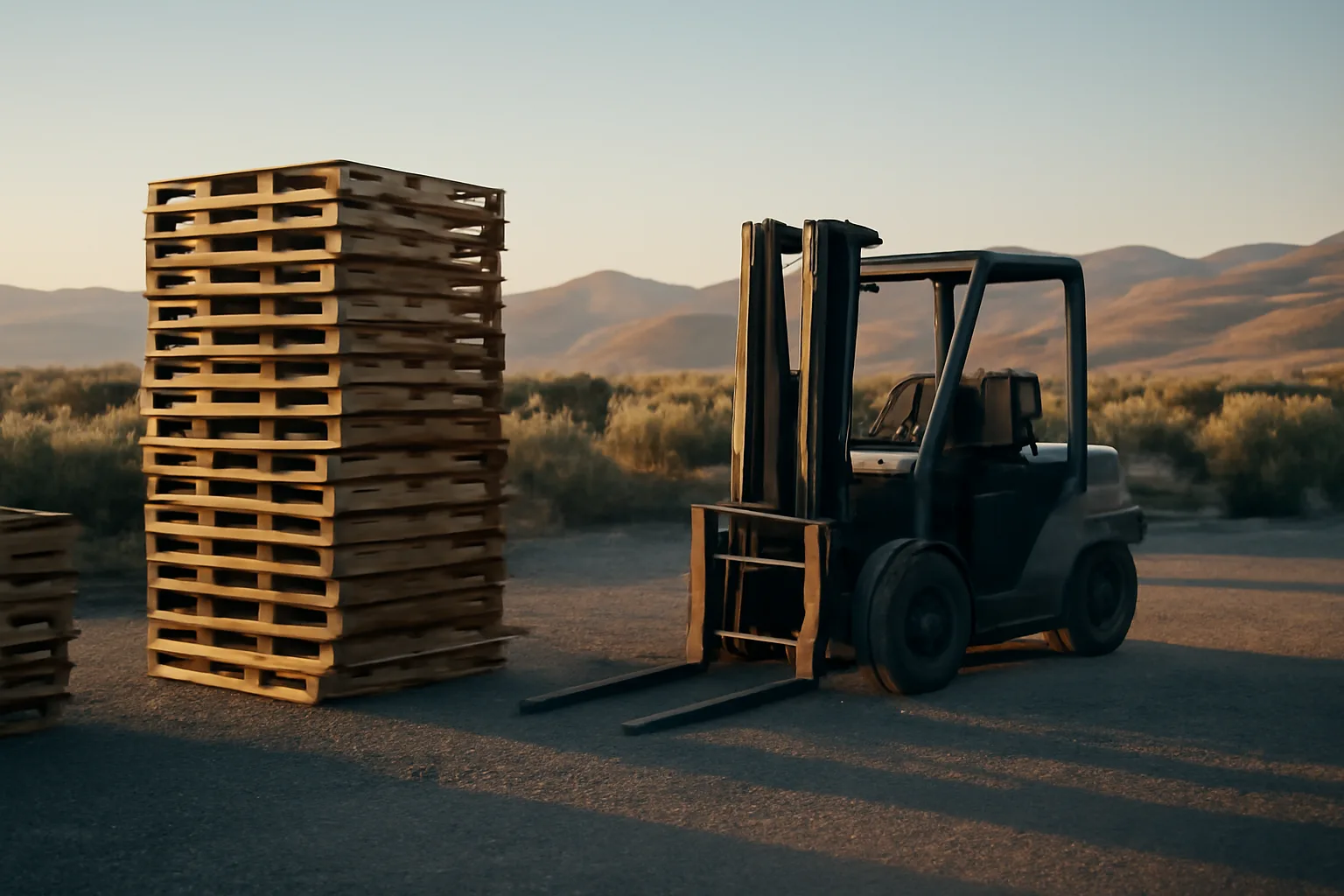
TL;DR
Idaho does not issue a statewide pallet yard license. You still form an entity with the Secretary of State, get a free IRS EIN, register taxes if you sell pallets, clear local zoning and fire rules, and set up workers comp and unemployment when you hire. Export heat treatment is a USDA APHIS path, not an Idaho license. Confirm every fee and clock with the board that collects it.
Do you need a license for a pallet yard in Idaho?
No. Idaho does not issue a statewide pallet yard license. You still need ordinary business paper, local land-use approval, and federal treatment authority if you want an ISPM 15 heat-treat mark on export pallets.
That gap between “no special license” and “you can dump pallets on a lot tomorrow” is where people get hurt. A pallet yard is a wood-storage and trucking use. Cities and counties police that with zoning, fire access, and sometimes a general business license. The state polices the company, the tax accounts, and (if you hire) workers compensation and unemployment. USDA polices the HT mark. None of those offices call it a pallet license. They still stop you if the paper is missing.
I would treat the city or county planning desk as the real gate, not the Secretary of State. Entity filings are easy. A gravel lot zoned for outdoor wood storage, with truck turning room and a fire-department opinion you can live with, is not. Call planning before you sign a lease.
If you later want the California comparison, the paper load there is heavier. Idaho is lighter on state licensing and stricter in practice on local land use. Read how to start a pallet yard in California only after you map your Idaho city, or you will copy the wrong myth.
How much does a pallet yard cost in Idaho?
Nobody publishes a clean Idaho pallet-yard startup total. You add pieces, and the yard lease plus machines dwarf the state paper. Idaho Code 63-3619 sets the state sales tax at 6 percent of the sales price, which is a selling cost, not a startup fee [1]. The IRS charges $0 to apply for an EIN online [6].
State paper is the cheap part. Articles of organization go to the Idaho Secretary of State under the LLC statute [4]. Confirm the live filing amount on the SOS fee list before you pay. Do not trust a blog number. Assumed business names, if you trade under a brand that is not the legal entity name, are a separate SOS filing. Confirm that fee too.
The money that actually matters is site control, a forklift, racks or bunks, a nailer, lighting, and liability insurance. A used sit-down forklift often costs more than every Idaho filing combined. I would lease a rough industrial lot with highway access before I buy land. Buying acreage “because pallets need space” is how people trap cash in mud and fences.
Skip a new kiln unless you already have export customers who will pay for HT marks. Skip a showroom. Skip custom software in year one. A gravel pad that drains, a used forklift you can get parts for, and a phone will open more yards than a pretty shop.
Insurance quotes vary by yard size, forklift use, and whether you send trucks. Get numbers from a commercial broker who has written wood-yard or recycling accounts. I will not invent a premium. Workers compensation, once you have employees, is not optional in Idaho [3]. That premium belongs in the cost model, not as a surprise in month two.
Retail pallet sales pick up that 6 percent state rate unless a valid exemption applies [1]. Wholesale for resale is a different tax paper path (exemption certificates), not a free pass to skip registration. Confirm taxable vs exempt handling with the Tax Commission, not with a Facebook group.
How long does a pallet yard take in Idaho?
The state company paper can move in days. The yard itself takes as long as zoning, fire, the lease, and (if you hire) labor accounts. I would not promise anyone a calendar. Nobody should. Processing times change, and local hearings slip.
An EIN from the IRS is often immediate if you apply online during their hours [6]. SOS entity filings are usually the fast state step. Tax registration through the Idaho Tax Commission follows after you have the entity and EIN. Unemployment registration with the Department of Labor belongs with hiring, not with the fantasy version of opening day [12].
Zoning is the long pole when you need a special use permit, a variance, or a neighbor fight over outdoor storage and truck noise. That can be a single planner conversation or a public hearing. Confirm the path with the planning department that has jurisdiction over the lot. Title 67, Chapter 65 is the state land-use framework cities and counties use to write those ordinances [11].
APHIS heat-treatment approval, if you want export marks, is a federal facility path. It runs on inspections and your temperature records, not on Idaho’s LLC date. Build that only after the yard is a real place.
A boring but honest sequence: control the land, then file the entity, then tax accounts, then insurance and workers comp before the first employee, then buy the forklift. Reversing that order is how people pay rent on a lot they cannot legally use.
What Idaho state filings come first?
Form the company, get the EIN, then register taxes. Local zoning can run in parallel, and it should, because it is slower.
Idaho LLCs form when articles of organization become effective under Idaho Code 30-25-201 [4]. File with the Secretary of State. Confirm the current fee on their schedule. If you operate as a sole proprietor under your personal legal name, you may skip the LLC, but I would not. Pallets, trucks, and yard visitors are lawsuit magnets. An LLC is not magic. It is still the basic box most yards should use.
Get an EIN if you will hire, open a business bank account, or file employment returns. The IRS says, “Applying for an EIN is a free service offered by the Internal Revenue Service” [6]. Do not pay a reseller for that.
If you sell pallets at retail in Idaho, you need a seller’s permit. Idaho Code 63-3620 makes it unlawful to transact business as a seller without a permit [2]. Register through the Tax Commission’s business registration process. Confirm what they want this month. Do not treat a wholesale-only story as an excuse to stay invisible. Many “wholesale” yards still make taxable sales.
Hire people and you add two more state doors: workers compensation security under Title 72 [3], and unemployment insurance tax with the Department of Labor [12]. File those before the first paycheck, not after.
Paper | Agency | What you confirm with them Entity articles | Idaho Secretary of State | Current filing fee and form EIN | IRS | $0 online application [6] Seller’s permit | Idaho Tax Commission | Whether your sales are taxable [2] UI tax account | Idaho Department of Labor | After you have employees [12] Workers comp | Insurer, under Idaho Code 72-301 | Coverage in force before first hire [3] Local business license | City or county clerk | Whether your town even has one Zoning / use permit | Planning department | Outdoor wood storage and trucks [11] HT facility | USDA APHIS | Only if you want ISPM 15 marks
What local zoning and fire rules actually stop pallet yards?
Local zoning is the Idaho gate that state licensing myths ignore. Cities and counties adopt zoning ordinances under the Local Land Use Planning Act [11]. Outdoor storage of wood, forklift traffic, and incoming trailers are not a home-occupation use. Do not put this behind a house on a county road and hope.
Ask planning three blunt questions. Is this parcel zoned for outdoor storage or warehousing? Do you need a conditional use permit? What do they want for screening, hours, and truck routing? Get the answer in writing if you can. Verbal “should be fine” is not a permit.
Fire departments care about piled wood, access lanes, hydrants, and ignition sources. Idaho uses a state fire-code framework through the State Fire Marshal’s office, built on the adopted International Fire Code [15]. I would walk the lot with the fire inspector before I stack 12-high. Confirm pile separation and access with them. I will not quote stack heights here because the adopted edition and the local amendment are what bind you, not a national blog.
Agricultural zoning is a common trap. “It is just wood” does not make a commercial pallet yard a farm. If the local plan and the zone list do not allow it, you are running an enforcement case, not a business.
County islands next to Boise, Meridian, Nampa, Idaho Falls, and Twin Falls each run their own maps. Unincorporated land is not automatically easier. Sometimes it is harder because there is no industrial district at all.
Do you need a sales tax permit to sell pallets in Idaho?
Yes if you are a retailer of pallets in Idaho. Idaho Code 63-3620 requires a seller’s permit to transact business as a seller [2]. Idaho Code 63-3619 sets the state rate at 6 percent of the sales price [1]. Local add-ons exist in some districts. Confirm the rate for your ship-from or point-of-sale location on the Tax Commission rate tools, not on a memory of “Idaho is 6 percent everywhere.”
Sales for resale can be exempt if you take a valid exemption certificate. That is paperwork discipline, not a vibe. Keep the certificates. If a cash customer wants three repaired pallets for a shop, that looks like retail.
I would register before the first invoice. Playing “we only wholesale” while selling to contractors off the yard is how you buy an audit. Confirm taxable services too. Delivery charges and repair labor can be treated differently than the pallet itself. Ask the Tax Commission, not your competitor.
Idaho has no California-style annual LLC franchise tax sitting on top of this. Entity income tax still exists for some structures. Confirm current treatment for your LLC or corporation with the Tax Commission. I would not pick a C-corp on day one for a small yard just because someone online likes the sound of it.
Do Idaho pallet yards need ISPM 15 heat treatment?
Not for domestic pallets that never leave the country as regulated wood packaging. You need official heat treatment and marks when the pallets are wood packaging in international trade under ISPM 15 and the USDA APHIS wood packaging rules [8] [10].
ISPM 15 calls for heat treatment to “a minimum temperature of 56 °C for a minimum duration of 30 continuous minutes throughout the entire profile of the wood (including its core)” [10]. That is a facility program with records, not a propane torch and a hope. APHIS oversees the U.S. marking program for wood packaging. 7 CFR 319.40-3 is the import-side federal rule that makes treated, marked wood packaging the baseline for regulated material [8].
I would not build a kiln in Idaho because it sounds official. Kilns cost real money, need temperature mapping, and may raise DEQ air questions if you fire a boiler. Most first yards here should buy and repair used pallets for local shippers. Add HT when a customer account will pay for the mark and the extra handling.
If you are assembling the grade and HT record pack, HeatTreatPath publishes a $149 one-time Grade A/B + HT Kit on /start. This site is an independent publisher, not a law firm and not a treatment agency. APHIS still has to accept the facility. No kit replaces that.
Stamping HT on pallets you did not treat is a bad idea. It is also a fast way to lose the only customers who cared about the mark. Colorado and Arizona yards chase the same federal rule, not a friendlier state stamp. See how to start a pallet yard in Colorado and how to start a pallet yard in Arizona if you are comparing interior-West markets, not if you think their license list applies in Ada County.
What workers comp, unemployment, and OSHA rules hit an Idaho yard?
If you have employees, Idaho expects workers compensation security. Idaho Code 72-301 says every employer shall secure the payment of compensation under that law [3]. Confirm owner-officer exemptions and how to elect coverage with the Industrial Commission and your carrier. Do not assume a one-person LLC with no payroll needs a policy. Do not assume a two-person yard does not.
Unemployment insurance tax is a Department of Labor employer account once you have covered employment [12]. Register when you hire, then file on their schedule. Confirm current wage-base and rates with Labor. I will not post a rate that will be wrong next year.
Idaho private-sector yards sit under federal OSHA, not a state OSHA plan [9]. Forklifts are powered industrial trucks under 29 CFR 1910.178 [13]. That means training, evaluation, and not letting random cousins “just run the Toyota.” Wood dust, nails, and trailer loading are the daily hazards. I would budget time for forklift certification before I budget time for a logo on the fence.
Idaho’s minimum wage statute tracks the federal FLSA floor [5]. The federal minimum wage is $7.25 an hour [14]. Many forklift operators and pallet repair people in the Treasure Valley will not work for that, and you should not plan a crew on $7.25. Pay the market. Put the statute in the file so you know the legal floor.
I would write simple safety rules on day one: no riders on forks, eye protection when cutting, and no stacking that blocks the fire lane. Fancy binders nobody reads are a waste.
What environmental permits show up for an outdoor wood yard?
Maybe stormwater. Maybe air if you add a fuel-fired kiln. Maybe solid-waste rules if you become a dump. Start with drainage, not with a consultant retainer.
Outdoor industrial activity that discharges stormwater to waters of the United States or to a municipal system can need IPDES industrial stormwater coverage. Pallet yards with exposed wood, metal, and equipment are the kind of site EPA and state programs have in mind for industrial stormwater [17]. Confirm whether your lot is an industrial activity that needs a notice of intent, or whether a no-exposure claim is even honest. A muddy yard that sheets into a ditch is not “no exposure.”
I would grade the lot, keep dumpsters covered, and keep fuel in proper tanks before I buy a compost grinder. Grinding scrap into mulch is a different business with different neighbors.
Air: a small repair shop with hand tools is usually not a Title V drama. A heat-treat kiln with a boiler can be. Ask DEQ air permitting before you pour a pad for a burner. Confirm. Do not guess the exemption threshold from a forum post.
Solid waste: pallets you repair and resell are inventory. Piles you abandon are a problem. If the fire department or the county sees a wood dump, you will hear from them. Keep the scrap moving.
What site, equipment, and Idaho weather actually do to a first yard?
Lease industrial land with truck access, gravel that drains, and room to separate incoming junk from outgoing grade. That is the whole site plan. Offices can be a job shack.
Idaho freeze-thaw will destroy a dirt lot. Spring mud will eat a forklift budget. I would spend money on rock and grading before I spend it on a nailing line. Panhandle snow and Treasure Valley inversion days are different, but both punish bad drainage.
Equipment I would buy used and boring: sit-down forklift, pallet jacks, circular saw, nail guns, banding. Equipment I would not buy first: a new automatic nailing machine, a CNC anything, a second truck “because we might haul.” Hauling is its own insurance and CDL problem. You can open as a yard that customers pick up from.
Stack with forklift aisles you can still drive in February. Tarps on the best grade if your customers are picky. Do not fight the weather with a giant building in year one unless you already have the account mix to heat it.
Alaska yards deal with worse cold and a thinner customer base. If you are comparing isolation and freight, how to start a pallet yard in Alaska is a useful contrast. Idaho’s problem is usually zoning next to growth, not a lack of pallets.
How should you structure the first year of operations in Idaho?
Year one is repair and local sales, with paper that stays clean. It is not a national HT brand.
Month 1: lot control and zoning answer. Month 1 to 2: entity, EIN, tax registration, insurance quotes. Month 2: forklift, gravel, basic tools, fire-lane layout. Then buy inventory. Paying cash for a mountain of junk pallets before you can legally stack them is a classic miss.
Sell grade the customer will actually pay for. Mix #1 and #2, be honest about culls, and do not ship trash to a food warehouse. Keep simple records: who you bought from, what you sold, tax collected, and hours on the forklift.
Hiring: one operator who can run a forklift safely beats three untrained helpers. Put workers comp in force first [3]. Put OSHA forklift training on the calendar [13]. Pay above the $7.25 floor [5] [14].
I would pick up one grocery DC, one produce shipper, or one manufacturer and treat them like gold. Random Craigslist lots will not cover Treasure Valley rent.
Alabama and Arkansas guides are useful if you ever compare southern labor and humidity to Idaho dry cold, not because their boards control Boise. Skim how to start a pallet yard in Alabama or how to start a pallet yard in Arkansas as market color, then come back to your county planner.
What is a waste of money when you open a pallet yard in Idaho?
A new kiln with no export book. A retail storefront on a commercial strip. Custom software. A brand-new forklift from the first dealer who calls. Paying a website mill for a “pallet license” package that files nothing Idaho actually requires.
Also a waste: copying pallet yard license in California checklists as if Idaho had the same boards. It does not. California’s license story is a different animal. Idaho’s story is zoning, tax, labor, and optional federal HT.
I would not hire a full-time bookkeeper on day one. I would not pour a giant concrete yard before you know your drainage plan. I would not take every dirty pallet “because volume.” Disposal and fire risk are real costs.
Spend on gravel, lighting for early dark in winter, and a broker who understands commercial general liability plus inland marine for the forklift. That is dull. It keeps you open.
Where do you confirm fees, and what should you ignore?
Confirm SOS filing amounts with the Secretary of State. Confirm seller’s permit and sales-tax handling with the Tax Commission [1] [2]. Confirm workers comp with the Industrial Commission and your carrier [3]. Confirm UI with Labor [12]. Confirm zoning with the city or county that has the map [11]. Confirm HT with APHIS. Confirm stormwater with EPA and DEQ [17].
Ignore national “how to start a pallet business” lists that start with a made-up state pallet license. Ignore anyone who guarantees approval times. Ignore paid EIN sites [6]. Ignore Facebook legal advice about agricultural exemptions for a commercial yard.
If you want the Grade A/B plus HT paperwork pack in one place after you know you need it, the $149 one-time kit is on /start. Use it as forms and checklists. It does not file your Idaho accounts and it does not bind USDA.
You can open a lawful pallet yard in Idaho without a special state license. You cannot open one without a lot the planners will live with, tax accounts that match how you sell, and labor coverage when you hire. Do that paper in that order.
Frequently asked questions
Do you need a license for pallet yard in idaho?
No statewide pallet yard license exists. You still need entity paper with the Secretary of State, tax registration if you sell, local zoning and often a city business license, plus workers comp and unemployment when you hire. Export heat treatment is USDA APHIS, not an Idaho license. Confirm each item with the board that issues it.
How much does pallet yard cost in idaho?
There is no official Idaho startup total. State paper is small next to the lease, a used forklift, gravel, and insurance. EIN filing is $0 through the IRS. Idaho state sales tax is 6% on retail sales. Confirm SOS and city fees with those offices. I would not buy a kiln until export customers exist.
How long does pallet yard take in idaho?
Entity and EIN paper can be days. Zoning, fire access, and the lease set the real clock and can run weeks to months if a hearing is required. APHIS HT approval is a separate federal timeline after you have a facility. Nobody should guarantee a date. Confirm current processing with each office.
Do I need a seller's permit to sell used pallets in Idaho?
If you sell at retail in Idaho, yes. Idaho Code 63-3620 requires a seller’s permit to transact as a seller. Resale certificates can cover true wholesale, but you still need the tax account and the certificates on file. Confirm your mix of retail vs wholesale with the Tax Commission before you invoice.
Does Idaho require ISPM 15 for domestic pallets?
No. ISPM 15 and the APHIS wood packaging program apply to regulated wood packaging in international trade. Domestic pallets moving inside the U.S. do not get an Idaho HT mandate. If you want the mark, you need an official treatment program, including 56°C for 30 continuous minutes through the core.
Can I run a pallet yard from agricultural land in Idaho?
Only if that zone and the planning department allow the commercial storage and trucking use. Agricultural land is not a free pass for a pallet yard. Title 67, Chapter 65 is the state zoning framework. Ask the county or city planner in writing before you stack pallets on a farm parcel.
Do I need workers comp as a sole owner with no employees?
Idaho Code 72-301 requires employers to secure compensation. A true no-employee owner setup is different from a yard with payroll. Confirm owner-officer rules and elective coverage with the Industrial Commission and a carrier. The moment you hire, treat coverage as required before the first shift.
Is a pallet yard a junkyard under Idaho city codes?
Sometimes local codes lump outdoor storage, secondhand yards, or junk uses in ways that catch pallet stacks. Sometimes they do not. It is a local definition fight, not a statewide pallet license. Bring photos and a site plan to planning and to the fire inspector instead of arguing the word junk on the internet.
What NAICS code do pallet yards use?
Repair and manufacturing often sit in 321920 (wood containers and pallets). Merchant wholesale of used pallets may fit a merchant wholesaler code instead. Use the code that matches what you actually do, because it can affect stormwater sector mapping and some insurance applications. Confirm with your accountant and DEQ if stormwater is in play.
Do I need a stormwater permit for outdoor pallet storage?
You might. Exposed industrial activity that discharges stormwater can need Idaho IPDES industrial stormwater coverage. A clean no-exposure story is rare on a working gravel yard. Ask DEQ about your lot, drainage, and whether a notice of intent is required. Fix grading and covers either way.
Can I heat-treat pallets without an APHIS mark?
You can heat wood. You cannot treat that as ISPM 15 for export packaging unless you are in the official program and use the mark correctly. APHIS runs the U.S. wood packaging marking side. Stamping HT without the program is how you create a federal problem and angry overseas customers.
Does Idaho charge a California-style franchise tax on LLCs?
Idaho does not run that California-style annual LLC franchise tax. You still have SOS filings, possible entity income tax depending on structure, and sales tax on taxable pallet sales at the 6% state rate plus any local add-on. Confirm current entity tax treatment with the Tax Commission.
Do I need a CDL to haul pallets in Idaho?
A CDL depends on the vehicle weight rating and what you haul, under federal and Idaho motor-carrier rules, not on the fact that the cargo is pallets. Many first yards open as pickup-only and avoid that layer. If you put a heavy truck on the road, confirm CDL, registration, and insurance before the first load.
Which Idaho cities are realistic for a first pallet yard?
Look for industrial zoning and truck routes, not pretty retail. Treasure Valley industrial pockets, Twin Falls, Idaho Falls, and other freight nodes beat a downtown lot. The realistic test is the planner saying outdoor wood storage is allowed, plus a fire inspector who will live with your piles. Confirm on that parcel’s map.
Sources
- Idaho Legislature, Idaho Code § 63-3619 Imposition and rate of the sales tax: Idaho imposes state sales tax at 6 percent of the sales price on retail sales.
- Idaho Legislature, Idaho Code § 63-3620 Permits: Sellers in Idaho must obtain a seller’s permit before transacting business as a seller.
- Idaho Legislature, Idaho Code § 72-301 Security for payment of compensation: Idaho employers must secure the payment of workers compensation under Title 72.
- Idaho Legislature, Idaho Code § 30-25-201 Formation of limited liability company: An Idaho LLC is formed when articles of organization become effective with the Secretary of State.
- Idaho Legislature, Idaho Code § 44-1502 Minimum wages: Idaho’s minimum wage statute is tied to the federal Fair Labor Standards Act minimum wage.
- IRS, Apply for an Employer Identification Number (EIN) online: Applying for an EIN is a free IRS service.
- eCFR, 7 CFR 319.40-3 General permits; regulated articles: Federal plant-health rules require regulated wood packaging material to meet treatment and marking conditions.
- OSHA, State Plans: Idaho is not listed among states operating an OSHA State Plan, so private-sector yards fall under federal OSHA.
- IPPC, ISPM 15 Regulation of Wood Packaging Material in International Trade: ISPM 15 heat treatment requires a minimum of 56 °C for 30 continuous minutes throughout the wood profile including the core.
- Idaho Legislature, Idaho Code § 67-6511 Zoning ordinance: Idaho cities and counties adopt zoning ordinances that control allowed land uses such as outdoor storage.
- Idaho Department of Labor, Idaho Code § 72-1349 Employer coverage: Idaho employers register for and pay unemployment insurance tax once they have covered employment.
- OSHA, 29 CFR 1910.178 Powered industrial trucks: Forklift operation in general industry is regulated as powered industrial trucks, including training requirements.
- U.S. Department of Labor Wage and Hour Division, Minimum wage: The federal minimum wage is $7.25 per hour.
- Idaho Department of Insurance, State Fire Marshal: The Idaho State Fire Marshal administers the state fire code used by local fire officials for occupancies such as wood storage.
- U.S. EPA, Stormwater discharges from industrial activities: EPA’s industrial stormwater program covers stormwater discharges associated with industrial activity, which can include outdoor material handling.